








Dr. Hugh Cutcher
October 7, 2026
Share this post
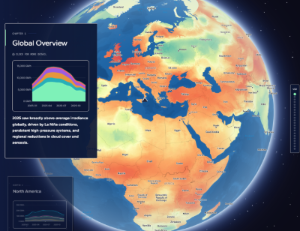
Western Europe recorded its strongest summer solar resource since at least 2007 during June to August 2026, according to analysis using the Solcast API. Across Europe, global horizontal irradiance (GHI) averaged 3.4% above the 2007-2025 average, with 81% of the area recording above-average irradiance. The repeated formation of heat domes over the season meant multiple long periods of clear skies and hot weather as cloud formation was suppressed. The strongest irradiance gains were concentrated over England and Wales. Above-average conditions extended across much of western and central Europe, but the increases were generally smaller than those recorded across the UK.
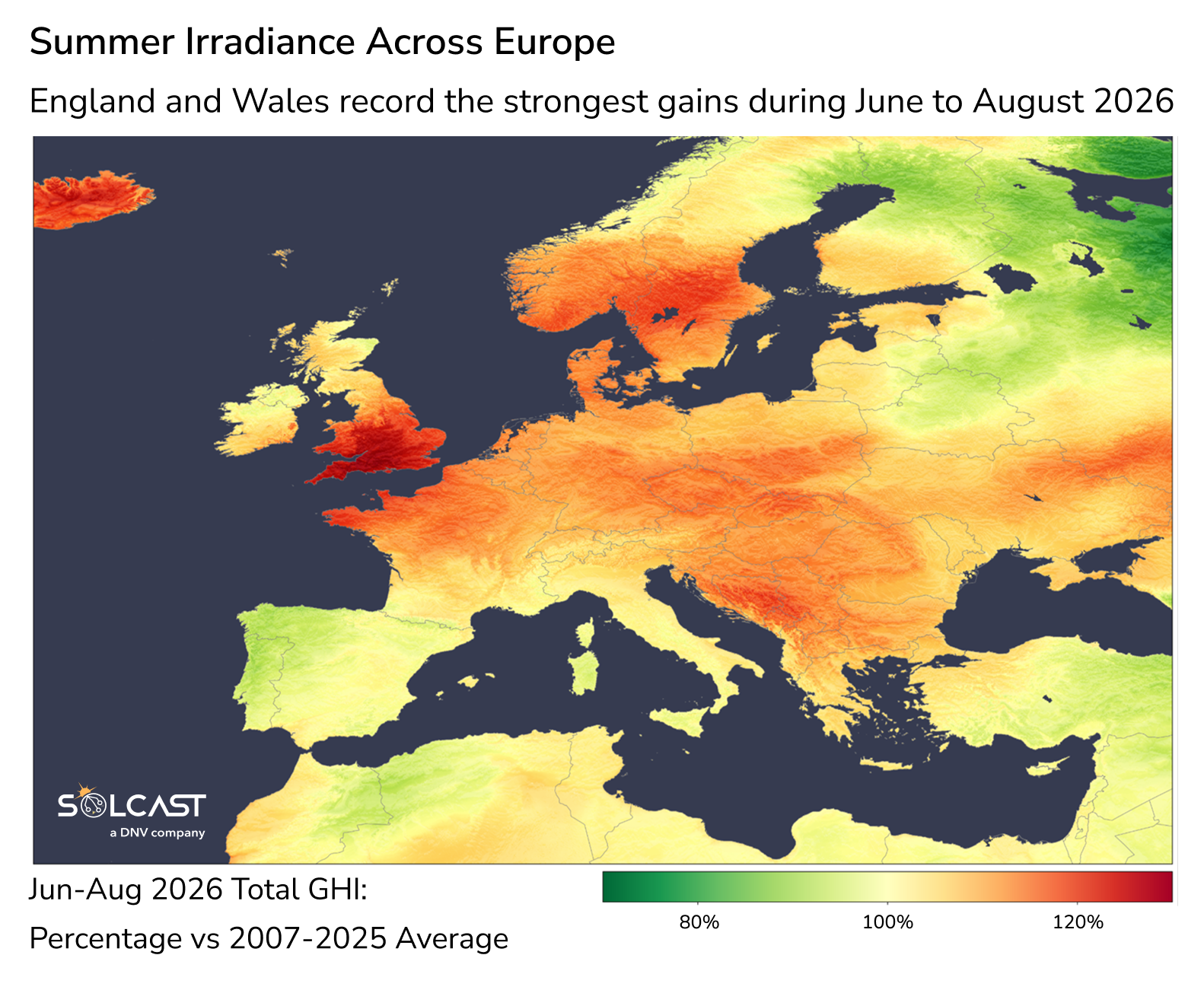
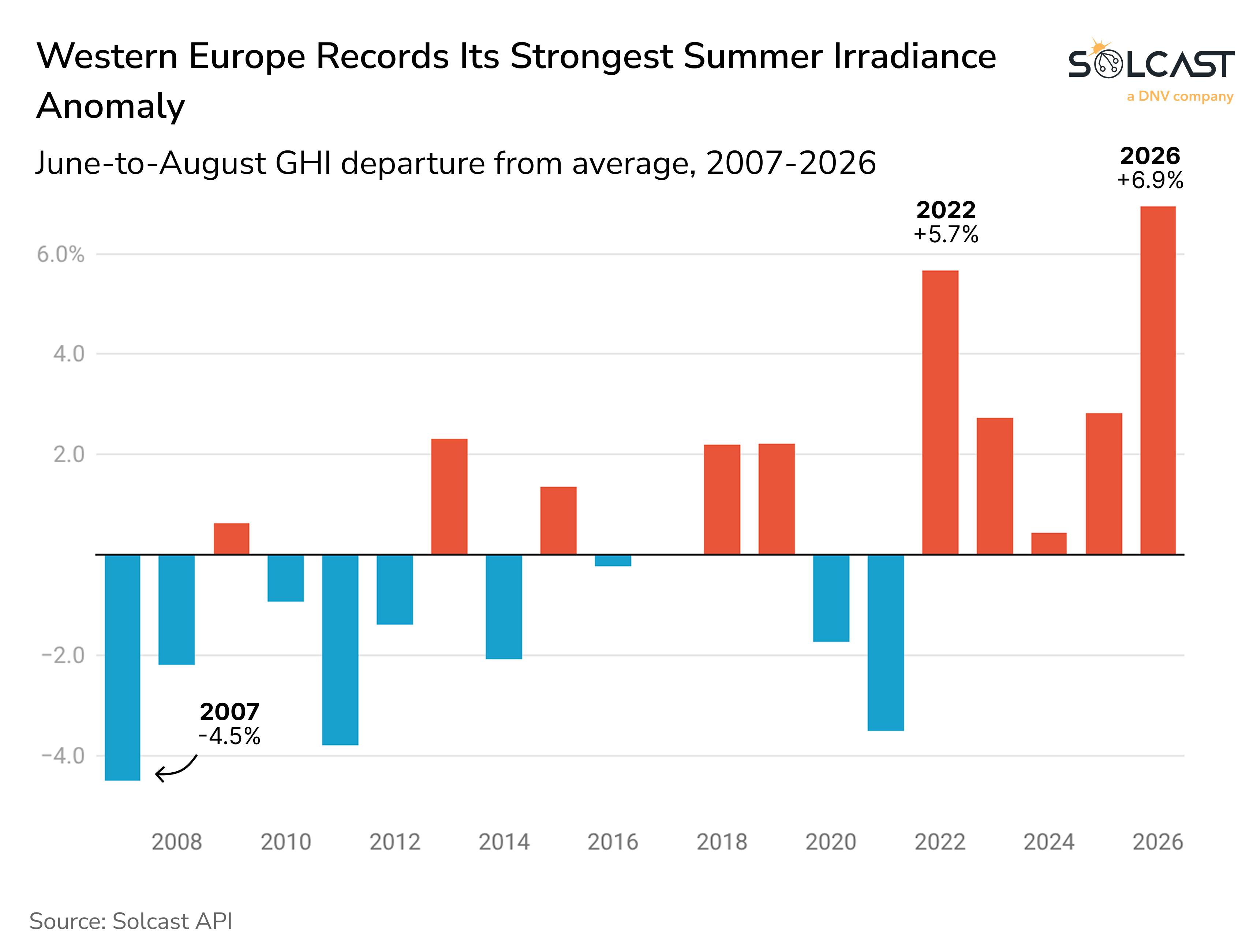
England and Wales recorded GHI nearly 16% above the 2007-2025 average, the largest increase identified in the analysis, while GHI around Paris was approximately 15% above average. The regional increase also stands out over time. Summer GHI across western Europe was 6.9% above the 2007–2025 average in 2026, exceeding the previous high recorded in 2022.
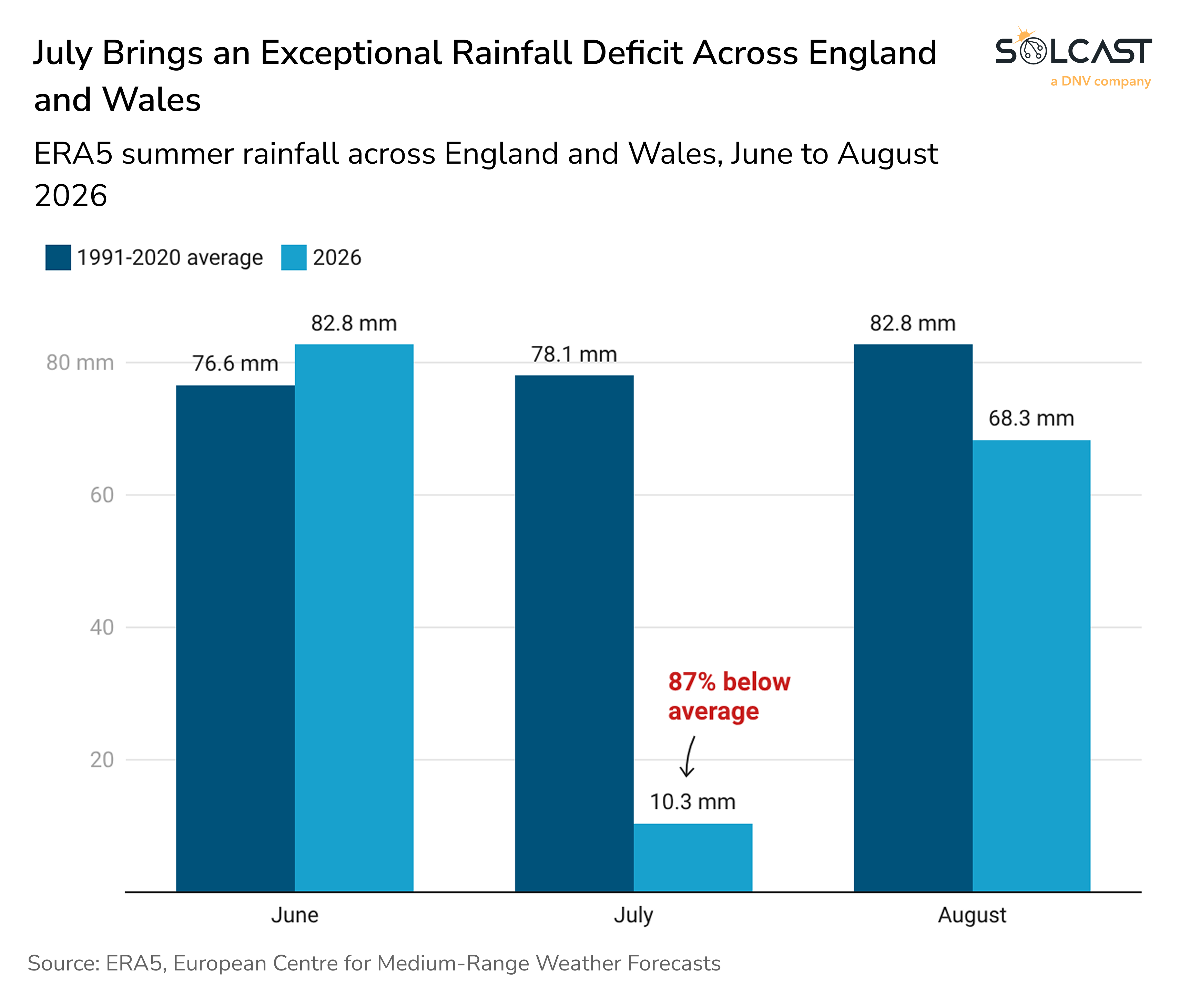
The elevated irradiance coincided with an exceptionally warm and dry summer across western Europe. ERA5 data shows that rainfall was 18% below average in June and 70% below average in July. Rainfall increased in August but remained 17% below average. Temperatures across the same area were more than 2°C above average in all three summer months.
July marked the driest part of the season. England and Wales experienced their driest July on record, while the European Commission’s Joint Research Centre reported widespread drought conditions across Europe in its July 2026 drought assessment. ERA5 data for England and Wales shows the scale of the July rainfall deficit, with just 10.3 mm recorded compared with a 78.1 mm average.
The exceptional warmth was part of a broader global pattern. Copernicus climate bulletins reported that June to August 2026 was jointly the warmest such period recorded globally, alongside 2024. Summer 2026 was the warmest on record for western Europe and the third warmest for Europe as a whole. August 2026 was also the warmest August recorded globally and the joint-warmest month across all calendar months, alongside July 2023.
Europe did see a change during the second half of August. Cooler Atlantic air brought more cloud, rainfall and thunderstorms to parts of western Europe, ending prolonged hot and dry weather across parts of the UK and neighbouring regions. This change reduced irradiance later in the month but was not enough to dampen the existing seasonal surplus.
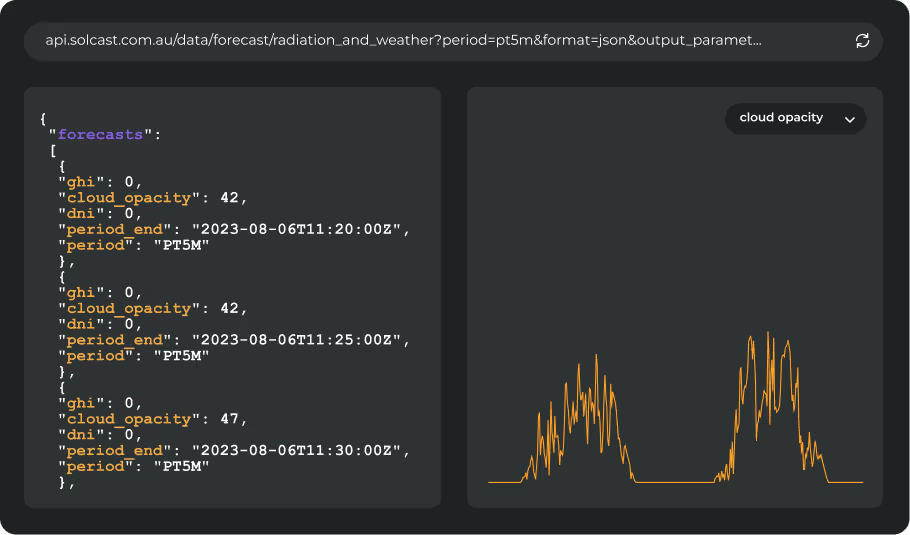
Track weather conditions, cloud movements, and irradiance-influencing factors that might impact your solar generation. Access bankable actuals and accurate forecasts when you sign up for a Solcast API toolkit. You can reach out to our team for an extended trial.