








Dr. Hugh Cutcher
November 26, 2025
Share this post
India's solar generation potential was significantly hampered during September and October due to an intensified southwest monsoon, resulting in a 15% decrease in irradiance compared to the long-term average, according to analysis using the Solcast API. The effects were not uniform across the country, with some regions experiencing notable declines in generation while others, particularly in the Northeast, benefited from drier-than-normal conditions. The start of November has brought a cold shift, with mixed expectations for the remainder of the year as conflicting climate signals complicated forecasting.
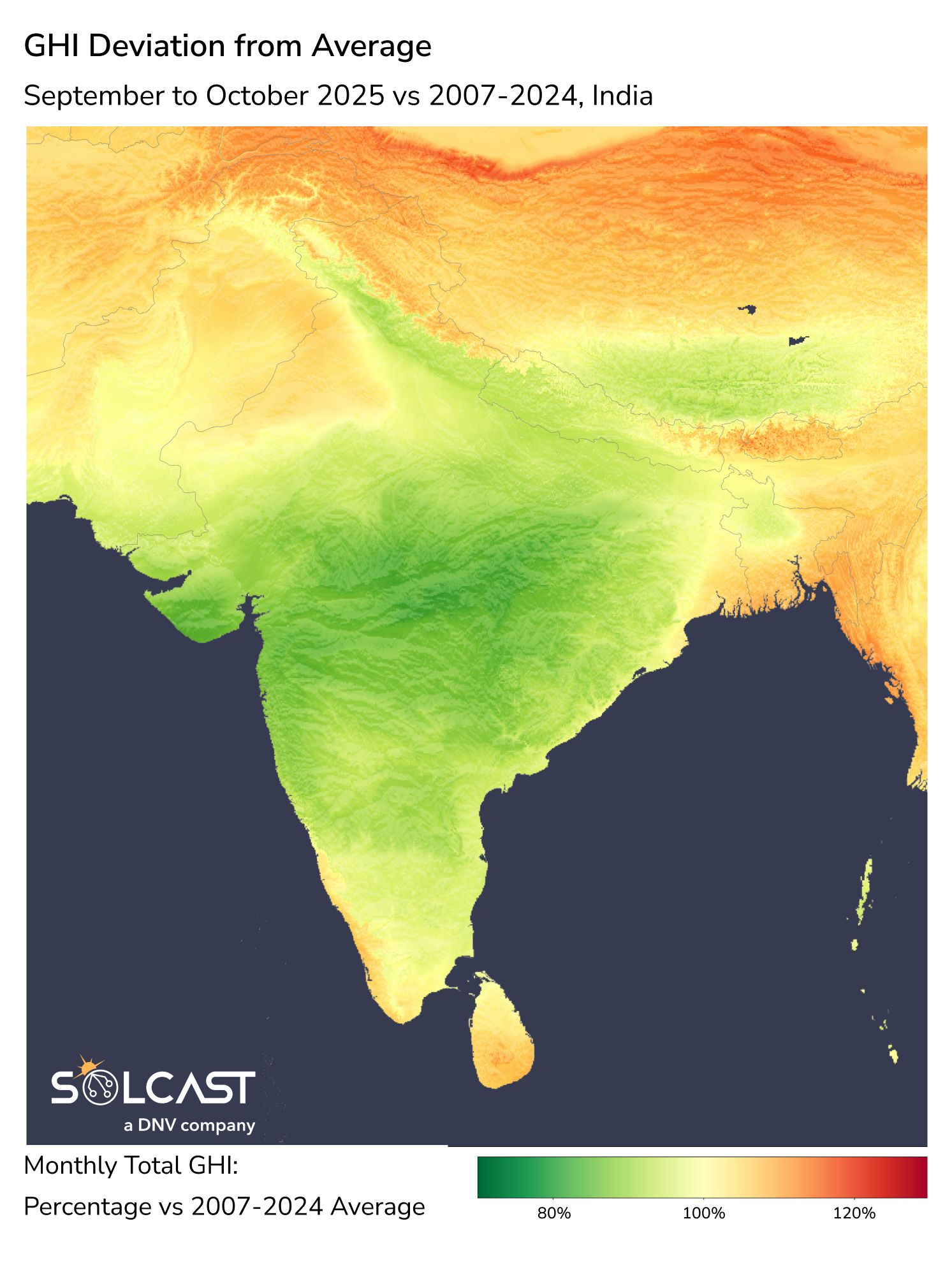
The southwest monsoon fully withdrew by October 16, having delivered 934.8 mm of rainfall across India – 8% above the seasonal norm and the highest since 2020. Central India saw the biggest increase, registering nearly 20% more rainfall than usual, driven by the frequent development of low-pressure systems in the Bay of Bengal. Conversely, North Eastern India experienced 20% below-average rainfall due to persistent high pressure that limited cloud formation and rainfall. Late in the season, Cyclone Montha brought additional rain to Andhra Pradesh and surrounding areas, further disrupting irradiance. This intensified monsoonal activity had a tangible impact on regional solar performance. In the northwest and central regions, increased cloud cover and rainfall suppressed irradiance, reducing cumulative generation.
Modelling for a representative 100MW solar site at Badod in Madhya Pradesh recorded a 19.1% drop in cumulative generation across September and October compared to the 2007-2024 average. In Gujurat, Santalpur saw a 9.13% decline, 2.91 GWh, essentially all in the last week of October. In contrast, Guwahati in Assam experienced a 4.54% increase in cumulative generation, benefiting from clear skies associated with the drier-than-normal conditions.
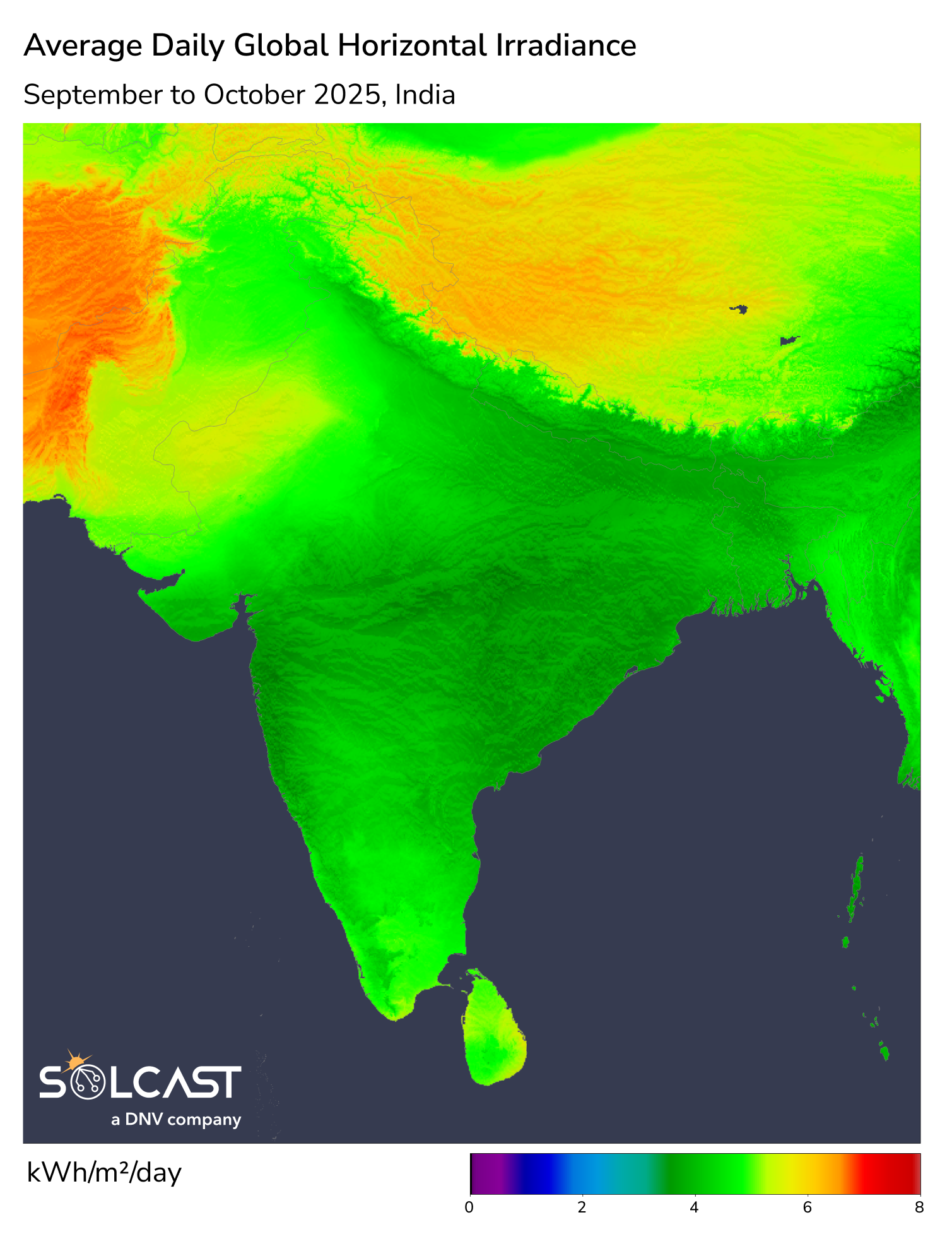
As November commenced, temperatures fell sharply, with readings up to 3 C below average across many regions, and forecasts indicating potential drops of up to 5 C below normal in parts of the north. The onset of the Northeastern Monsoon, which typically brings about 20% of India's annual rainfall mainly to the southeast, adds complexity to the seasonal outlook. While a negative Indian Ocean Dipole points to a weaker monsoon and potentially drier conditions, dynamical seasonal forecast models counter with expectations of above-average rainfall and continued lower-than-average irradiance into December. This divergence highlights the uncertainty in upcoming weather impacts on solar generation, with actual outcomes likely influenced by evolving atmospheric patterns.
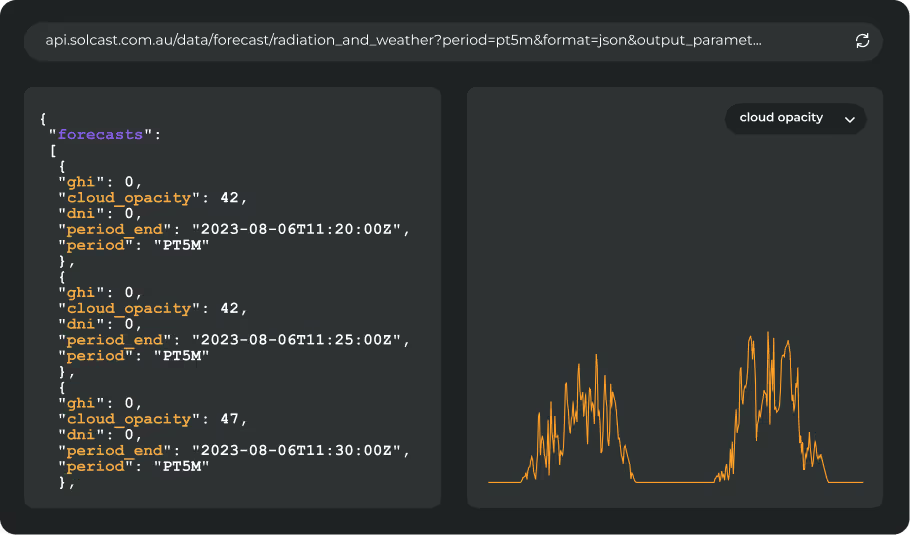
Track weather conditions, cloud movements, and irradiance-influencing factors that might impact your solar generation. Access bankable actuals and accurate forecasts when you sign up for a Solcast API toolkit. You can reach out to our team for an extended trial.