








Dr. Hugh Cutcher
February 25, 2026
Share this post
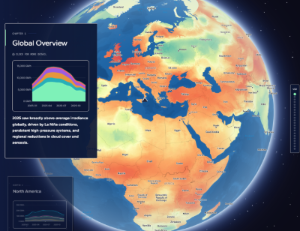
January 2026 delivered Europe’s coldest January since 2010, an exception to warm global temperatures. At the same time record-warm North Atlantic sea-surface temperatures helped create a succession of powerful storm systems. The result was a month of sharp regional contrasts for solar. Eastern Europe and Scandinavia recorded above-average irradiance under cold, stable air masses, while the UK and parts of Western Europe saw suppressed irradiance due to persistent Atlantic lows. Major PV markets experienced mixed outcomes: Germany ultimately finished the month with favourable irradiance, whereas Spain and Portugal endured one of their gloomiest starts to a year in decades.
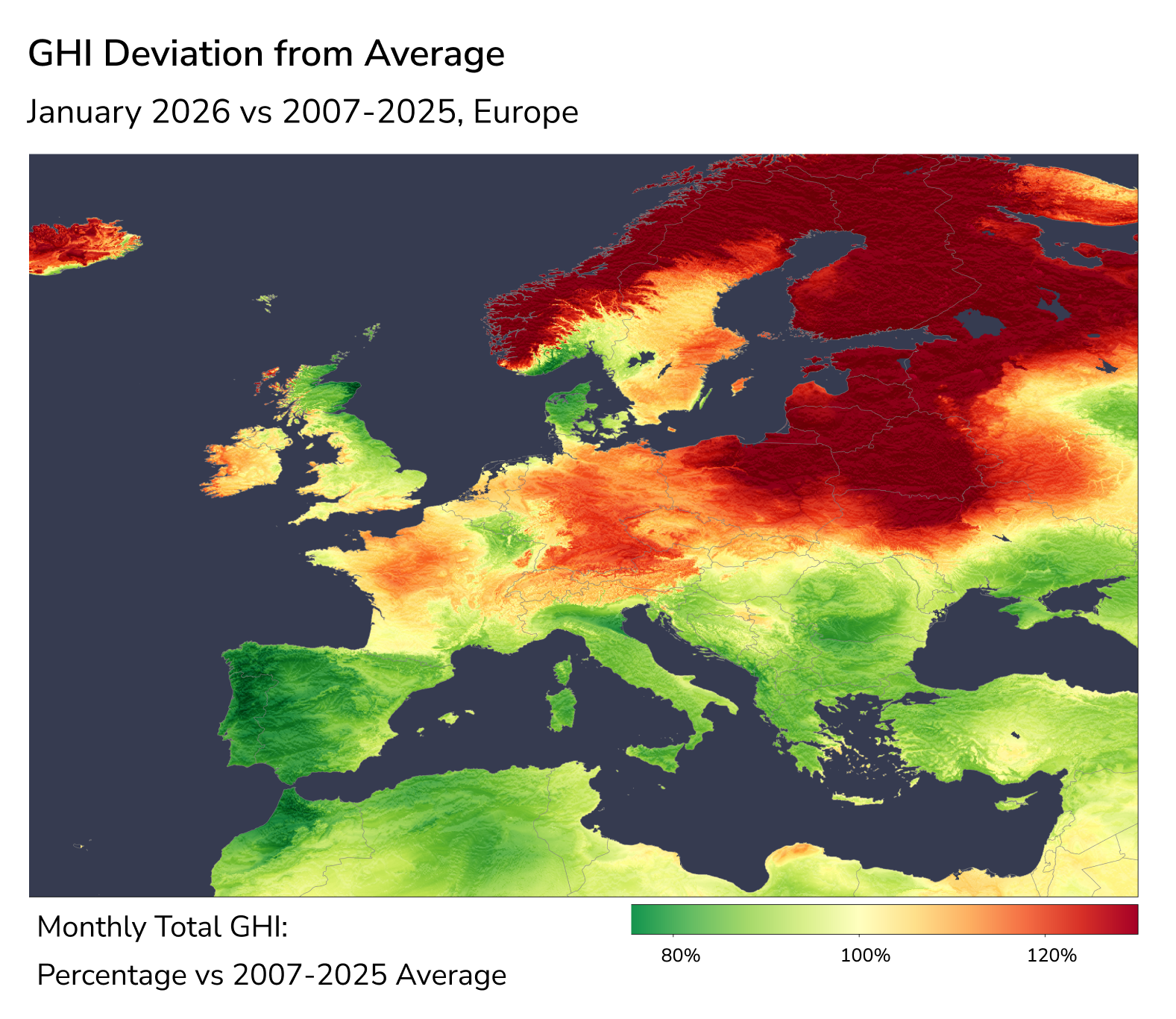
Across the Iberian Peninsula, Spain and Portugal recorded a distinctly below-average month for solar irradiance. Storm Kristin brought widespread cloud cover and repeated rainfall events, limiting clear-sky windows and reducing daily irradiance totals. January 2026 was the gloomiest on record most many parts of Spain, with nothing close seen since 2016. Rainfall reached 85% above normal, making it the wettest January in 25 years. Portugal saw nationwide rainfall of 233.4 mm, around double the 1991–2020 average of 105 mm, ranking as the country’s second-wettest January since 2000. Ongoing cloud across the month, rather than isolated storm peaks was the dominant feature shaping PV conditions across Iberia.
Further north, a series of strong Atlantic low-pressure systems, including Storm Goretti in the UK, tracked repeatedly into northwestern Europe. These systems delivered thick cloud bands, heavy rainfall and strong winds that sharply reduced irradiance across the UK and parts of Europe. Northern Ireland and southern England recorded their wettest January since the 1800s, with flooding and power outages accompanying prolonged overcast conditions. Germany also experienced several storm episodes, with heavy rain and strong winds interrupting solar resource during frontal passages. Clearer, colder air in the wake of these systems from post-frontal cold spells reduced atmospheric moisture and cloud formation, allowing monthly irradiance to finish above the long-term average despite the unsettled pattern..
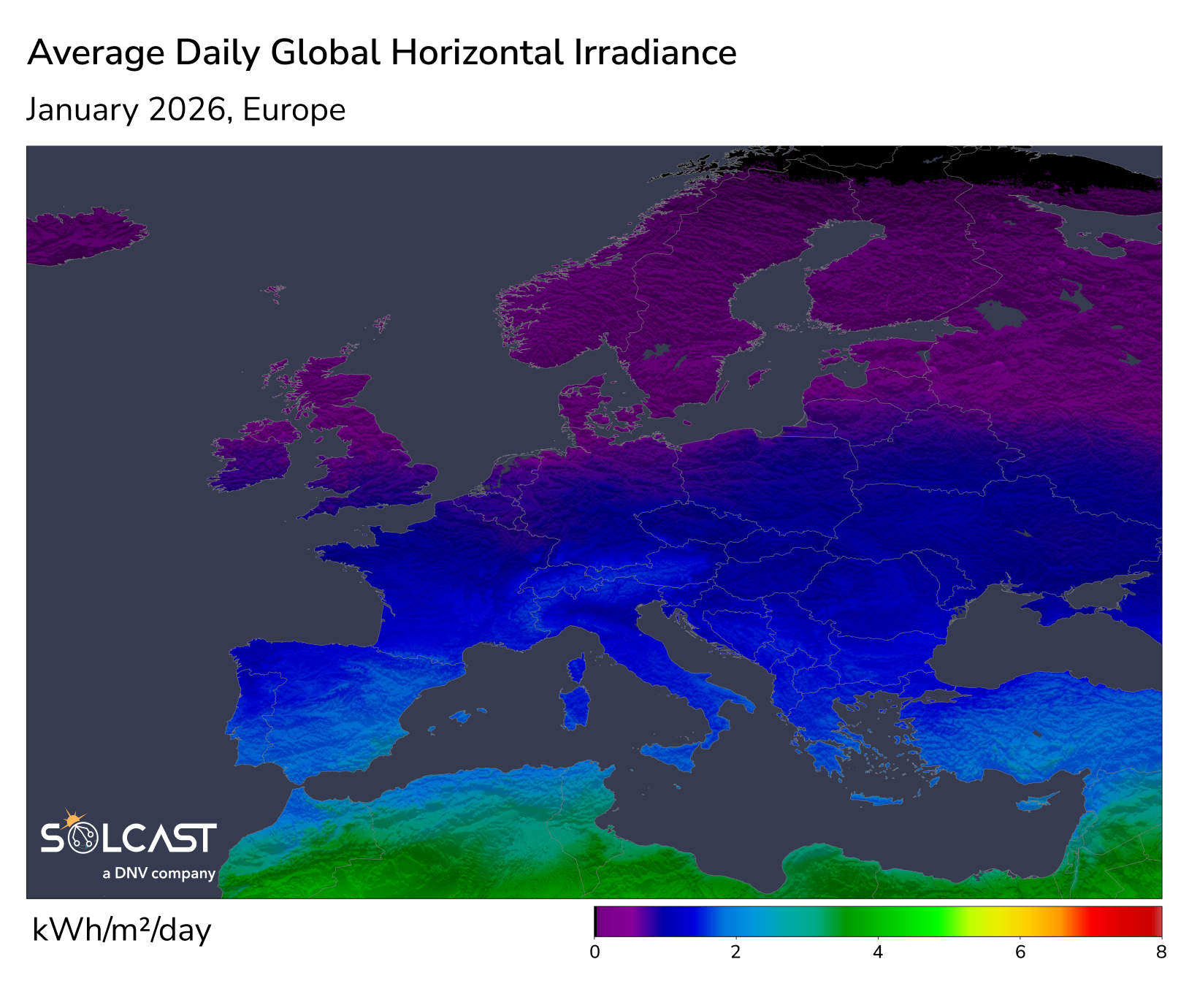
In Scandinavia, the Baltics and Poland, the solar irradiance ran 10% to 50% above average as a severe mid-month cold spell established dry, stable air across Eastern Europe. January 2026 was widely reported as Europe’s coldest January since 2010, bringing travel disruption and localized power outages. While winter day length inherently limits solar availability at these latitudes, reduced atmospheric moisture and more frequent clear or lightly clouded skies produced brighter-than-usual winter days. Far northern latitudes saw very high anomalies in percentage terms, but with limited real benefit to solar generation.
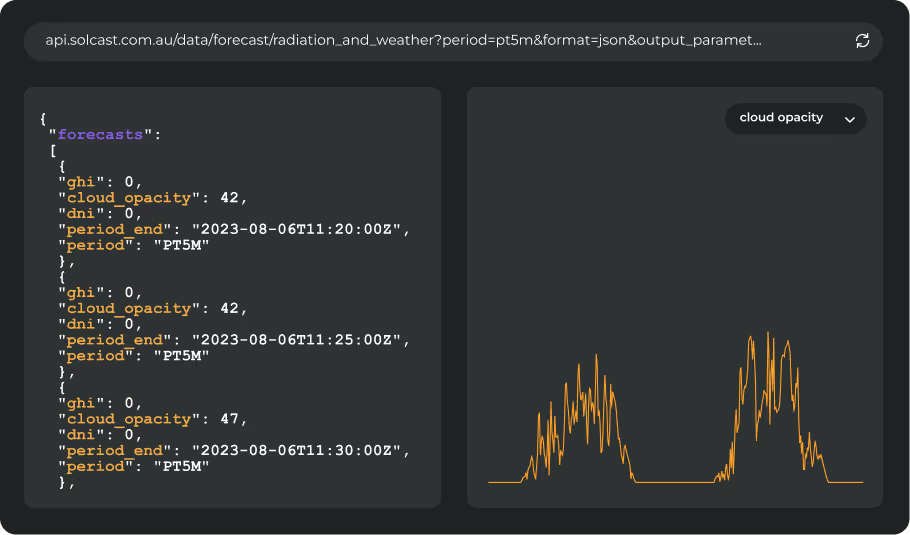
Track weather conditions, cloud movements, and irradiance-influencing factors that might impact your solar generation. Access bankable actuals and accurate forecasts when you sign up for a Solcast API toolkit. You can reach out to our team for an extended trial.