







Bankable solar data for accurate solar resource and energy yield assessments

Why choose Solcast for energy yield assessments?
BANKABLE DATA for energy yield assessments
Accurate, bankable TMY data
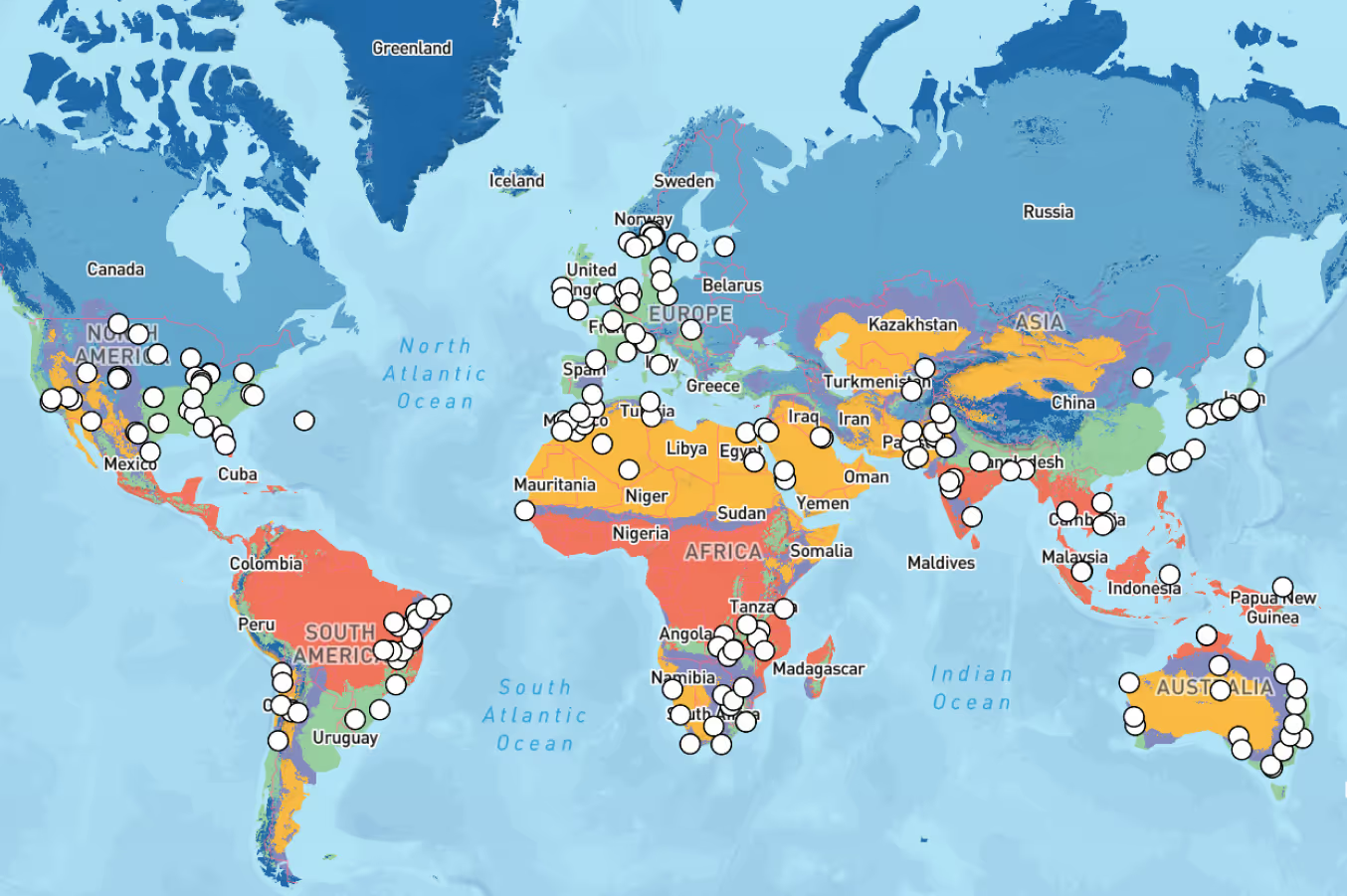
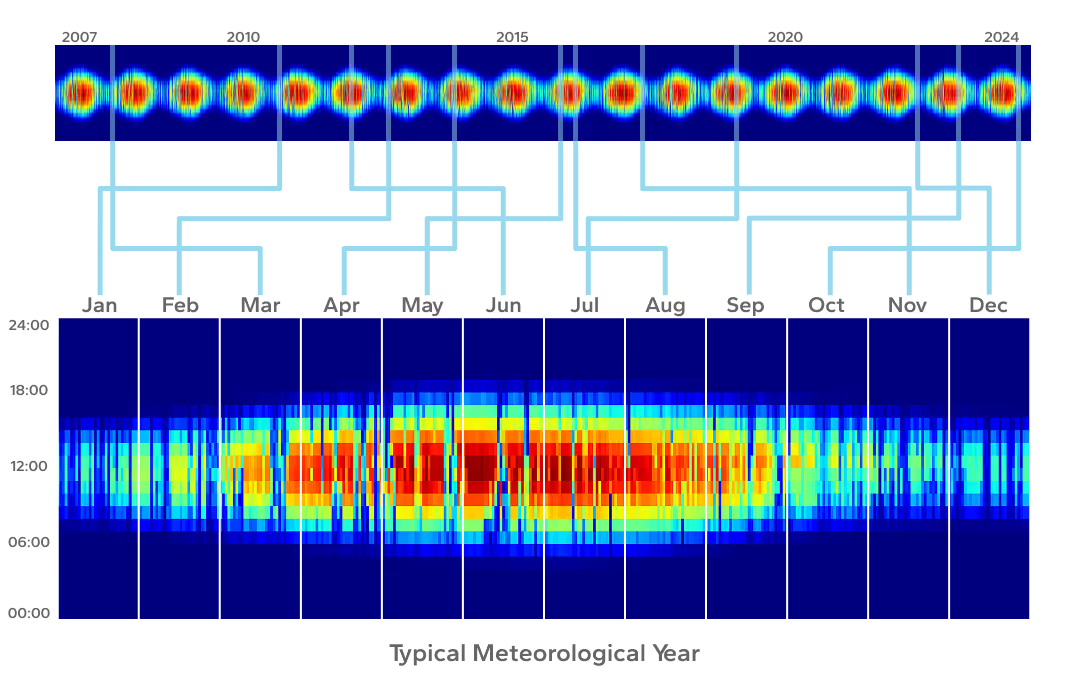
Validated by DNV over 207 sites, Solcast’s TMY data is proven to be bankable with low bias. This dataset is calculated by analyzing and combining real periods from a multi-year dataset based on statistical criteria to create a synthetic year that reflects typical weather conditions. It is suitable for accurately designing and optimizing projects, assessing solar and site resources for project financing, and performing long-term energy yield assessments and projections.
CLOUD AND IRRADIANCE TRACKING
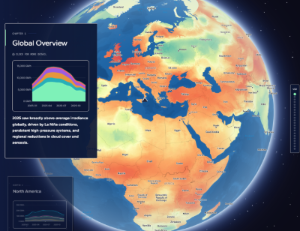
Bankable solar powered by live satellite irradiance data
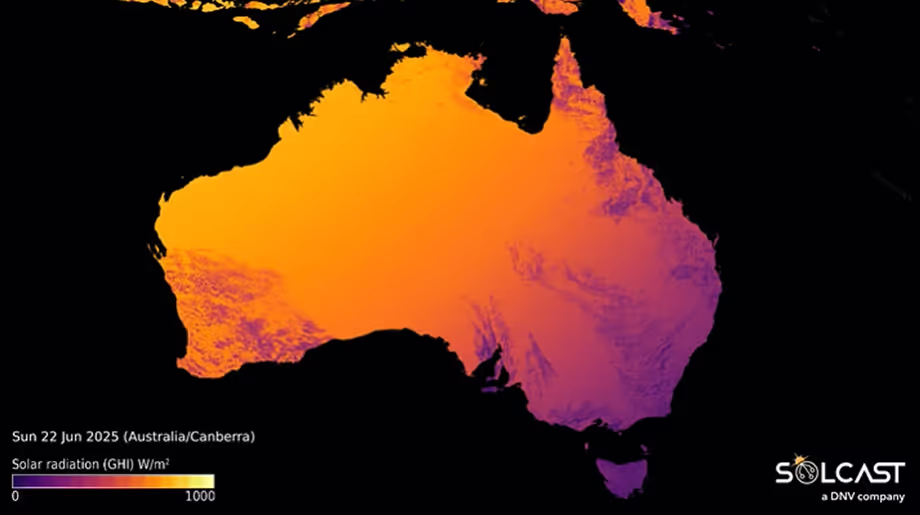
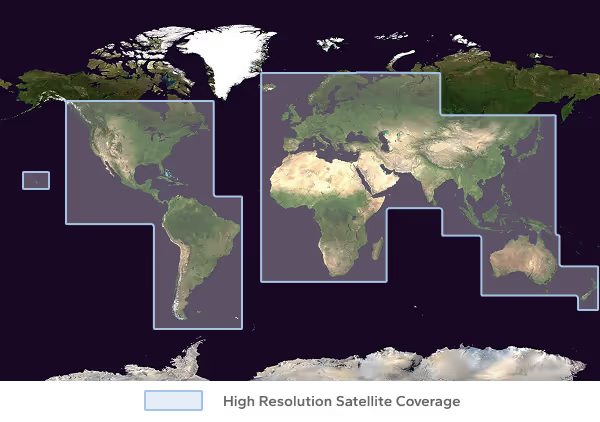
Designed for solar, from the ground up. Solcast uses 5-minute cloud tracking data that forecasts clouds at a resolution of 1-2km, downscaled to 90 metre resolution. Our irradiance data and PV power data is updated every 5 to 15 minutes. Aerosol and albedo effects are explicitly treated. This level of precision delivers the reliable inputs needed for accurate modelling and high-confidence energy yield assessments.
INTEGRATE
Integrate directly with your PV software, or upload with multiple file format options for your site assessments & energy yield estimates
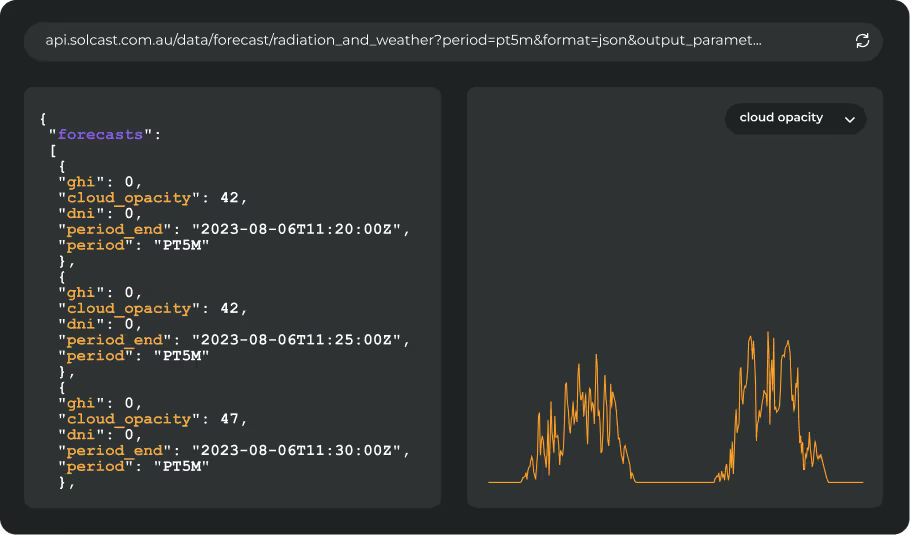
Solcast data is available directly in pvlib, PVSyst, SAM, PlantPredict and PV*Sol. Support for other solar and PV software via industry standard data formats. An SDK is available in both Python and Julia for direct API integration, with several example notebooks demonstrating typical integrations.
data access
Multiple probabilistic scenarios available for due diligence and solar resource assessment
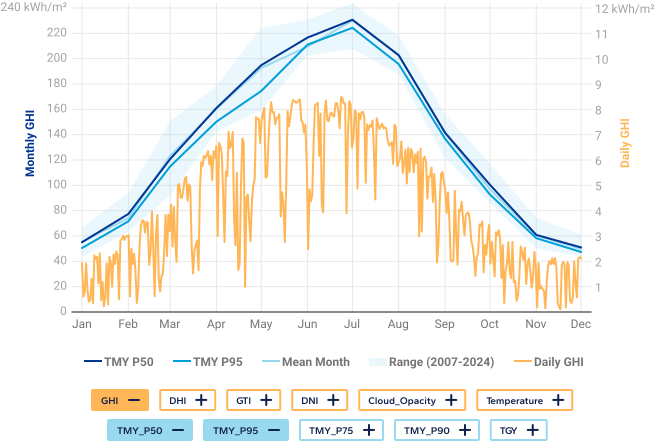
Direct API download for TMY P50 data. To get solar estimates, TMY PXX scenarios (P75, P90, P95) downloads are through the Solcast API Toolkit. Multiple file types supported (CSV, PVsyst, TMY3, SAM).
.avif)
INTEGRATED WITH DNV SOLAR RESOURCE COMPASS
Investment-grade energy estimates in 90 seconds
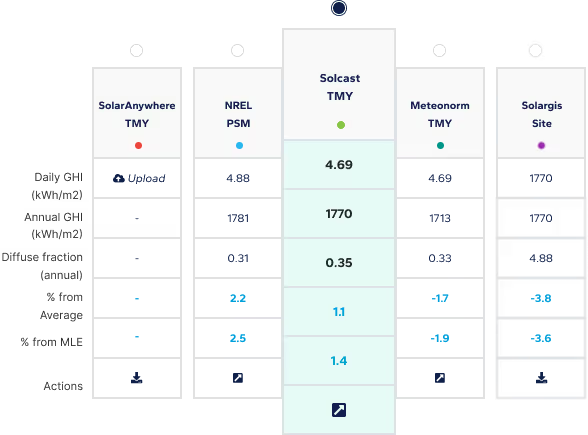
Solcast data is available directly in pvlib, PVSyst, SAM, PlantPredict and PV*Sol. Support for other solar and PV software via industry standard data formats. An SDK is available in both Python and Julia for direct API integration, with several example notebooks demonstSolcast TMY data integrates directly with DNV’s Solar Resource Compass (SRC) so you can complete early-stage energy yield assessments in just 90 seconds — with greater accuracy and confidence. Compare multiple datasets side-by-side to choose the most bankable resource file for your site.rating typical integrations.







_Frame.png)





































Frequently asked questions about energy yield assessments

What is an energy yield assessment?
An energy yield assessment is the process of estimating the expected energy production of a solar project over a defined period. It uses historical irradiance data, TMY files, weather variables to model long-term energy output. Accurate energy yield assessments are essential for system design, financial modelling, and project bankability.
Why does accurate irradiance data matter for energy yield assessments?
Irradiance is the single largest driver of solar production. Using high-resolution, low-bias irradiance datasets — like Solcast’s satellite-derived TMY and historical data — ensures your energy yield assessments reflect real, location-specific conditions. This reduces uncertainty and supports stronger investment decisions.
How does Solcast help reduce uncertainty in early-stage energy yield assessments?
Through high-resolution irradiance data, transparent validation, and integration with tools like DNV’s Solar Resource Compass (SRC), Solcast provides consistent, bankable inputs. This reduces uncertainty in early-stage assessments and accelerates screening, comparison, and feasibility studies.
Can Solcast data be used directly in my PV modelling software?
Yes. Solcast integrates natively with pvlib, PVSyst, SAM, PlantPredict, and PV*Sol — allowing you to perform energy yield assessments without switching tools. Additional formats support other modelling software, and SDKs in Python and Julia enable seamless API integration.