








Latest
Filters
Latest


Solar Analysis
Isaias ends historic Atlantic hurricane lull after sunny southern summer
An unusually quiet Atlantic hurricane season brought sunnier-than-average conditions across the southern US and Mexico, while prolonged dry weather contributed to elevated soiling losses before Isaias signalled a change in the pattern.
Solar Analysis
Solar Analysis
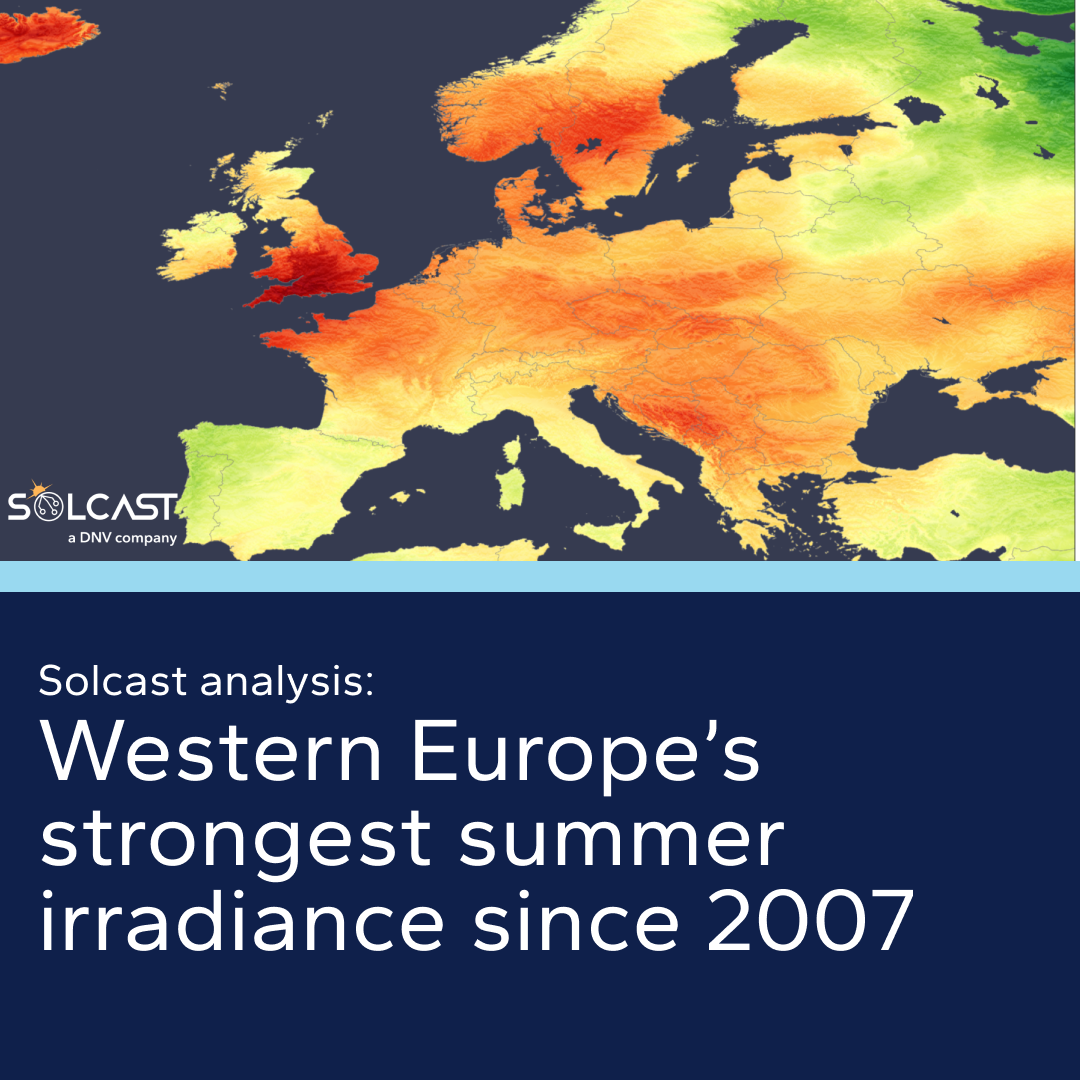
England and Wales lead western Europe’s record summer irradiance
Western Europe’s summer irradiance reached 6.9% above average in 2026, with England and Wales recording the region’s largest increase.
Solar Analysis
Solar Analysis
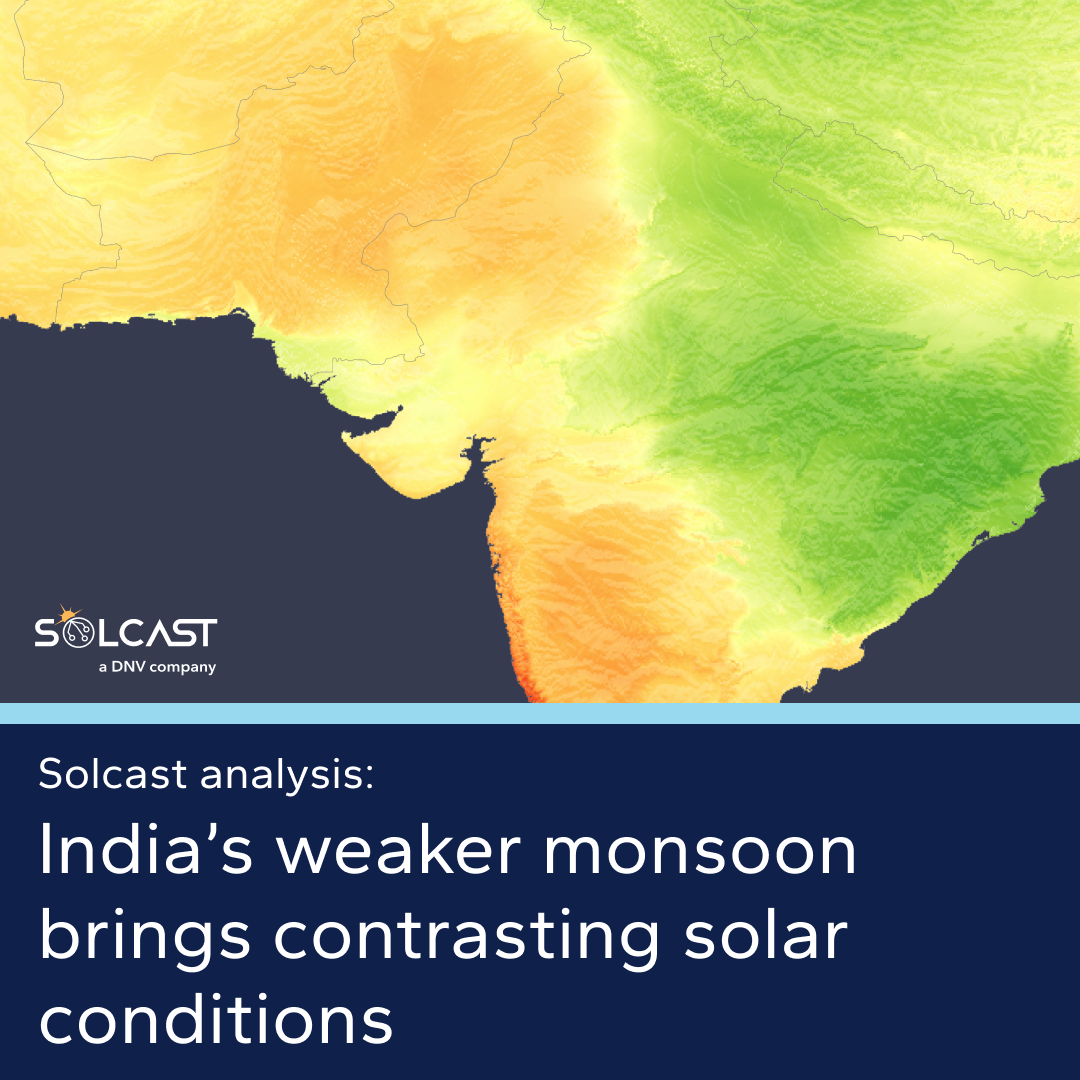
Weaker monsoon lifts irradiance in Western India as August storms dim the East
India’s 2026 summer monsoon produced sharply contrasting solar conditions. Irradiance increased across major PV-producing regions, while tropical depressions brought cloud, rain and significant deficits farther east.
Solar Analysis

Insights
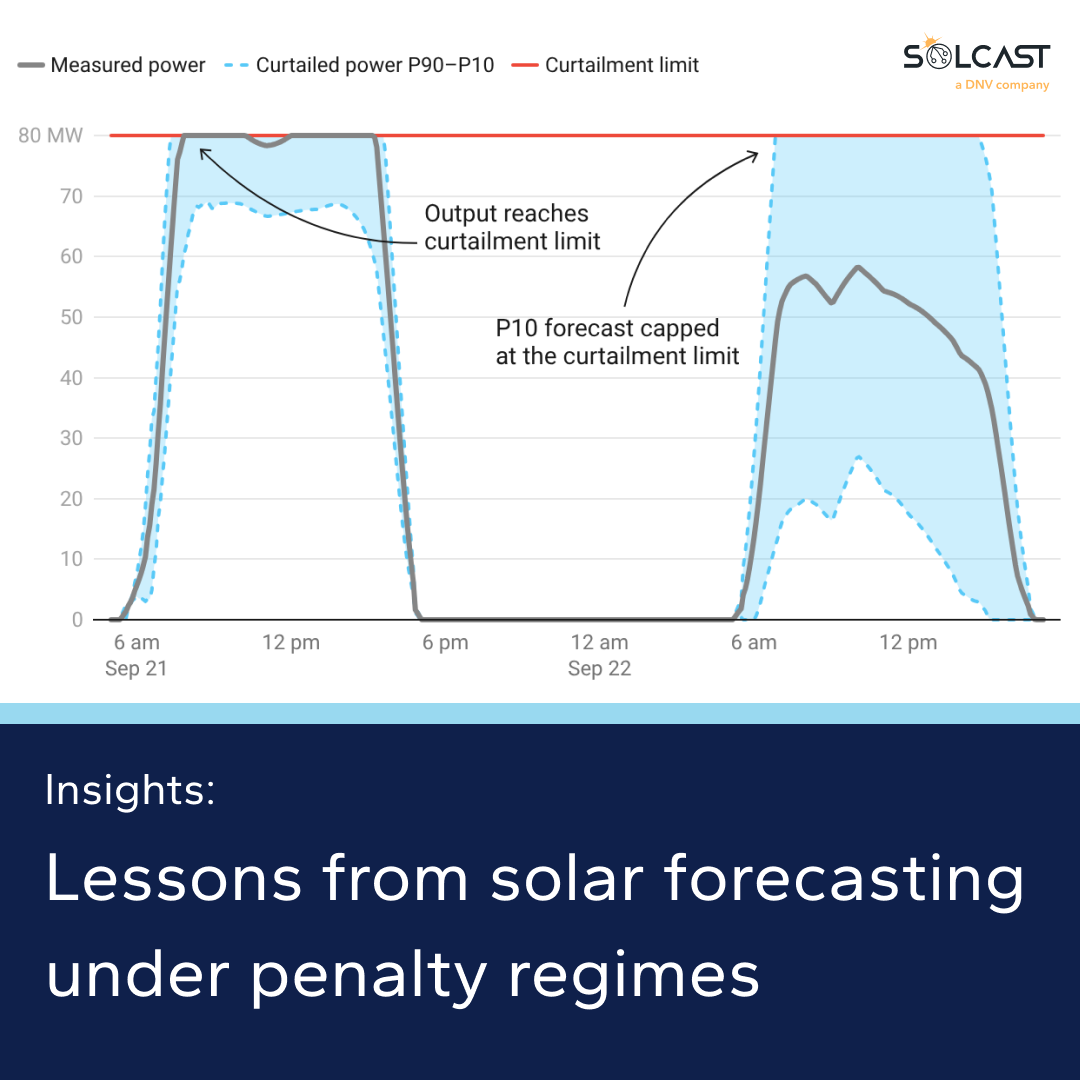
Operating a solar forecast under a penalty regime: what we've learned across multiple markets
What running solar forecasts into penalty markets across many countries has taught us about site adaptation, P90–P10 bidding and curtailment in practice.
Insights
.png)
Solar Analysis
Dry August pushes Dallas soiling losses towards 2% as North American GHI diverges
August brought contrasting solar conditions across North America, with above-average irradiance in the south-central United States and modelled soiling losses near Dallas approaching 2%.
Solar Analysis
.png)
Solar Analysis
Sunny north and cloudy south as Super El Niño defines South American winter
The first full El Niño winter since 2015 brought larger irradiance swings across South America and two rare snowfall events in Chile's Atacama Desert that likely affected solar generation.
Solar Analysis
Solar Analysis
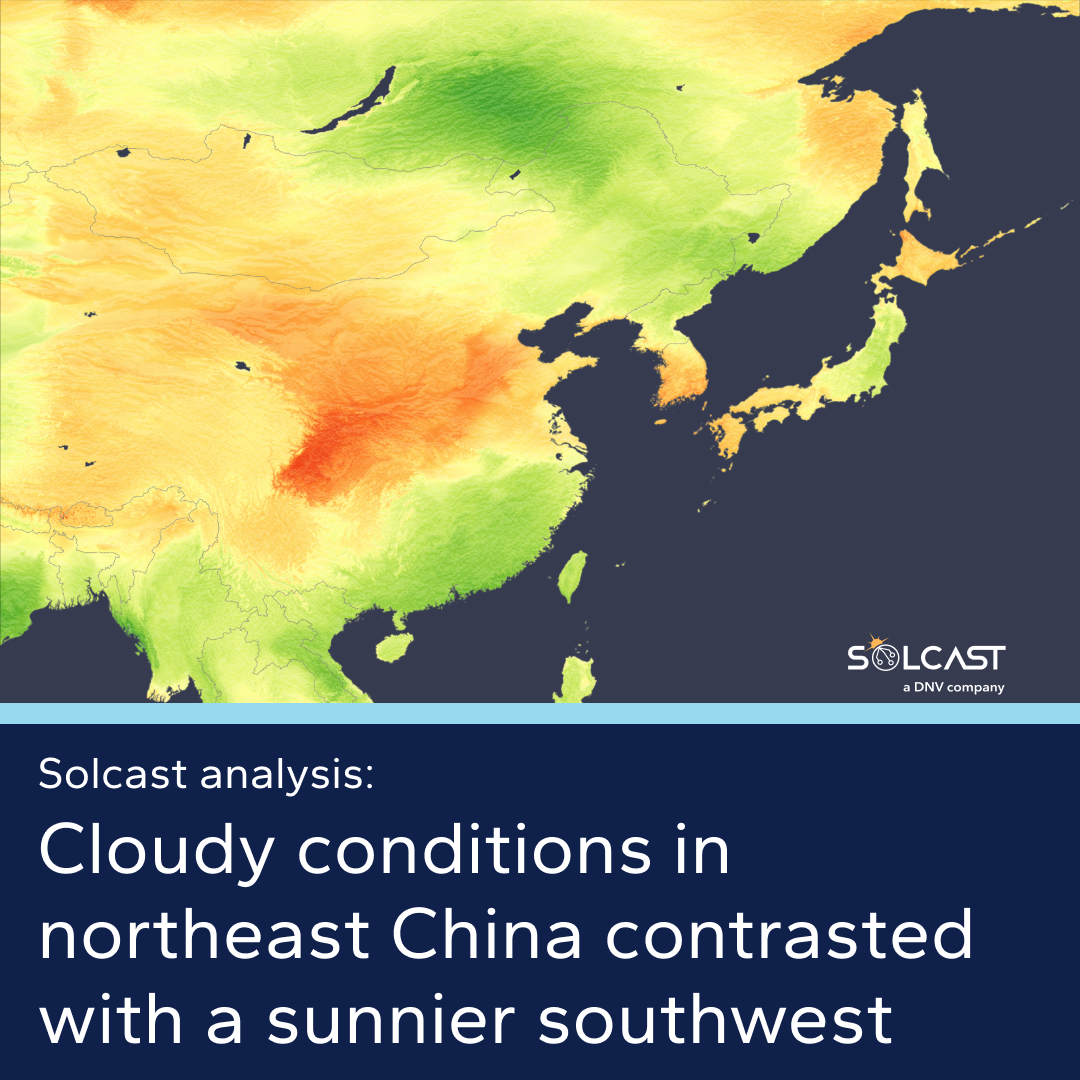
El Niño transition and a subtropical shift reshape Asia’s summer solar resource
Summer 2026 produced sharply contrasting solar conditions across China. A northward shift in the Western Pacific Subtropical High increased cloud and rainfall in Northeast China, while supporting sunnier conditions and irradiance gains of 20% to 25% across Sichuan, Chongqing and Guizhou.
Solar Analysis
Solar Analysis
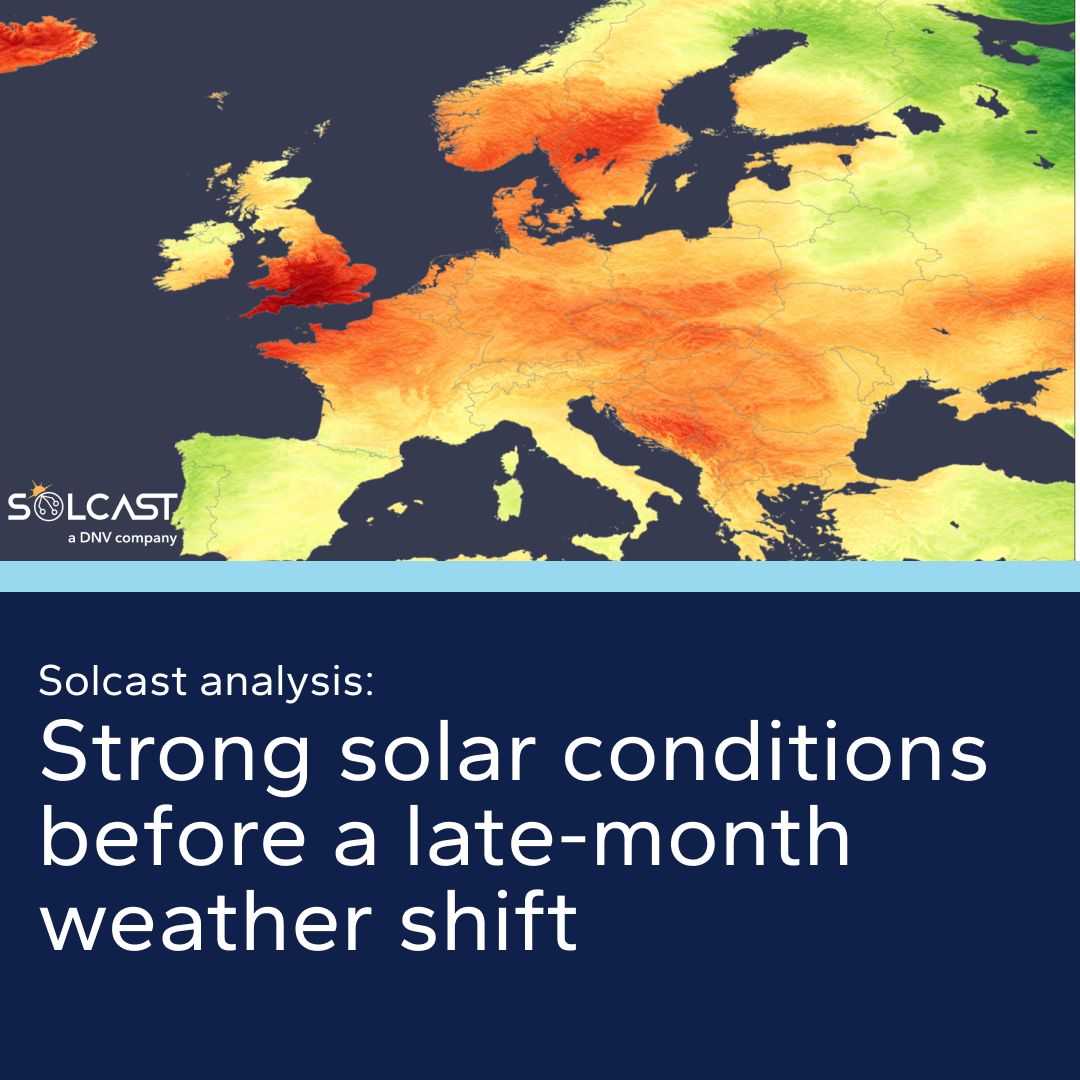
Europe’s solar resource surplus continues before late-August cloud shift
Europe's solar resource remained above average through August, before a weakening weather pattern brought shifting irradiance conditions later in the month.
Solar Analysis
Solar Analysis
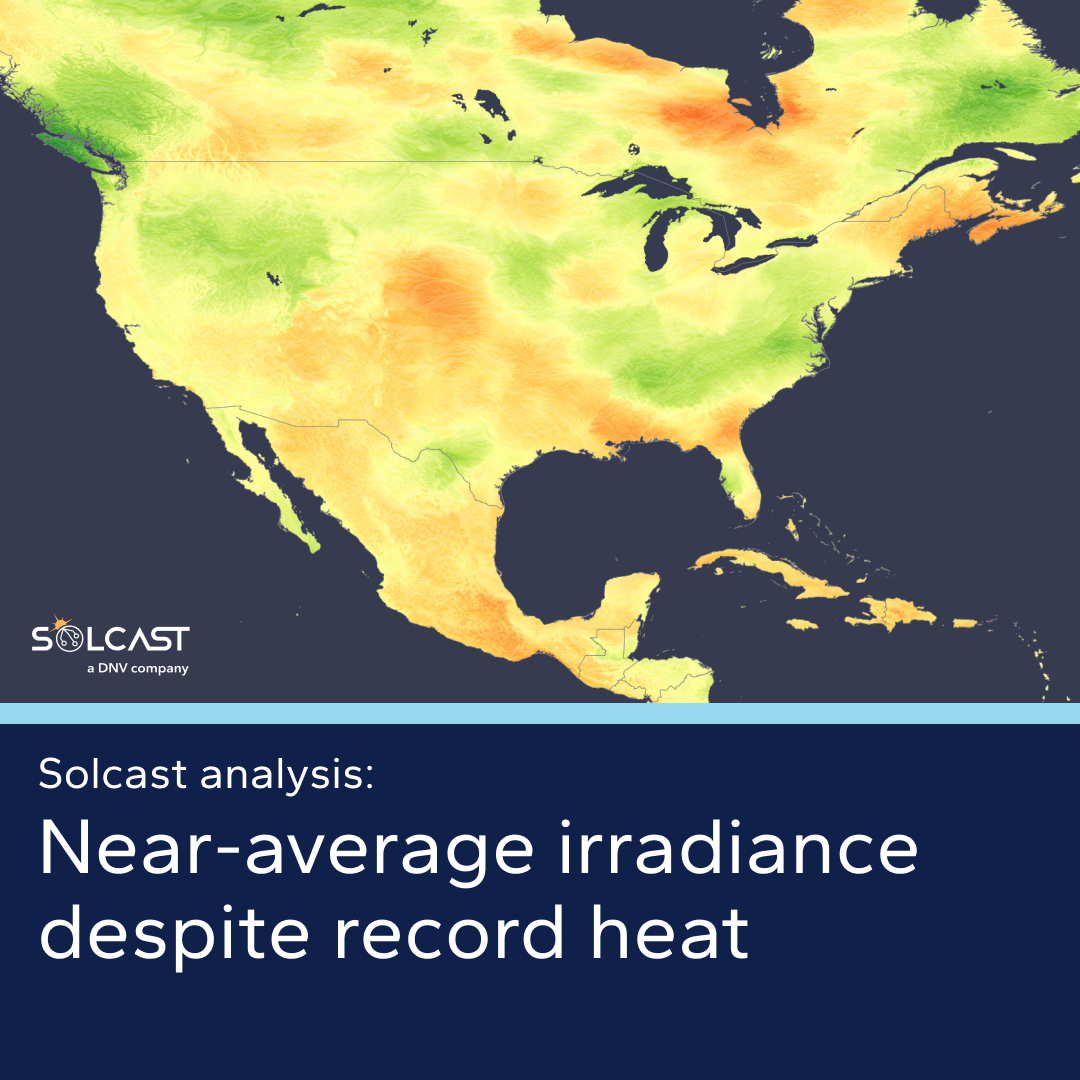
Despite record U.S. heat in July, North American irradiance remains near average
July 2026 was the hottest month ever recorded in the United States, yet North American irradiance remained close to long-term averages. Wildfire smoke and localized storms offset what could have been a stronger solar resource month.
Solar Analysis
.png)
Solar Analysis
Partial U.S. eclipse produced similar daily solar energy losses to higher-obscuration European locations
Eclipse timing played an important role in shaping daily solar losses during the 12 August event, while cloud conditions further influenced observed impacts. The study also examined electricity-market responses across Spain, France and New York.
Solar Analysis